

Course at a Glance
Duration
Dates
Capacity
Format
Language
Why Choose This Course?
This is a fully interactive online program that engages you every step of the way. It’s an immersive, hands-on training experience designed for surgeons who perform rhinoplasty weekly and are obsessed with detail and form. You will learn to see, think, and operate differently.
Artistic Foundation
Surgical Strategy
Active Mentorship
Clinical Case Feedback
Meet the Faculty
32-Weekend Curriculum
A structured progression from artistic observation and surgical planning to advanced tip, dorsal and secondary rhinoplasty techniques.
Module 1 — Fundamentals, Art & Planning
14 Lectures
- Art Training — Michael Esson · 8 lectures
- Photography and Digital Storage — Barış Çakır · 1 lecture
- Photoshop for Rhinoplasty Planning — Barış Çakır · 2 lectures
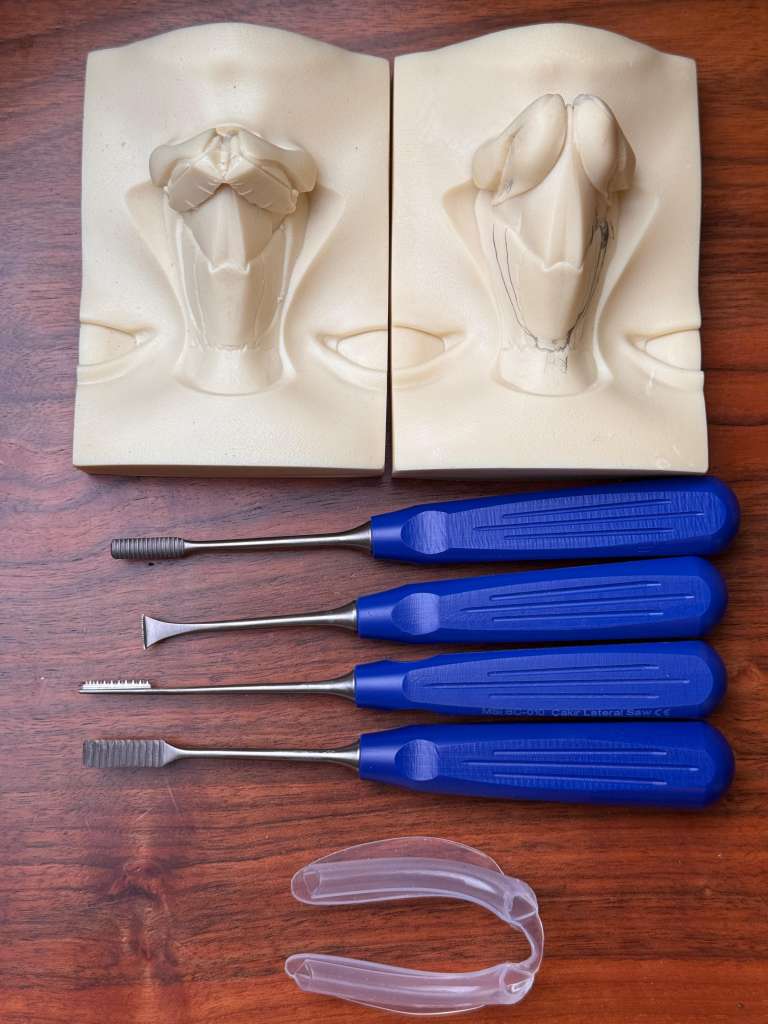
- Surgical Instruments — Barış Çakır · 1 lecture
- Taping, Splinting and Postoperative Care — Barış Çakır · 1 lecture
- Bloodless Surgical Field and Infiltration Techniques — Barış Çakır · 1 lecture
Module 2 — Tip Surgery & Advanced Details
8 Lectures
- Tip Surgery — Barış Çakır · 3 lectures
- Tip–Dorsum Relationship — Barış Çakır · 1 lecture
- Rotation and Projection — Barış Çakır · 1 lecture
- Cephalic Malposition — Barış Çakır · 1 lecture
- Alar Base Surgery — Barış Çakır · 1 lecture
- Fine-Tuning — Barış Çakır · 1 lecture
Module 3 — Dorsal & Preservation Surgery
7 Lectures
- Dorsum SPQR — Valerio Finocchi · 3 lectures
- Dorsal Y Technique — Erhan Coşkun / Ishida · 3 lectures
- Preservation Rhinoplasty for Latin and Asian Noses — Cesar Valdivia · 1 lecture
Module 4 — Secondary Rhinoplasty & Case Discussions
3 Lectures
- Secondary Rhinoplasty — Sebastian Haack · 3 lectures


“Form knowledge guides your osteotomies, stitches, and even your taping technique.”
– Assoc. Prof. Dr. Baris Cakir


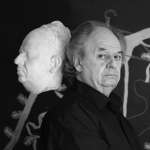
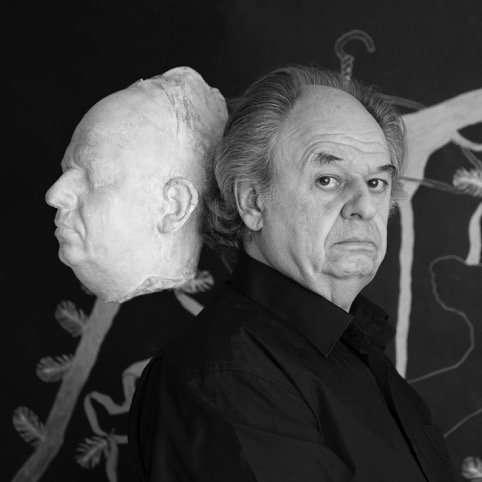
Michael Esson
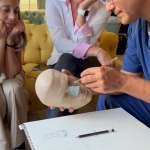
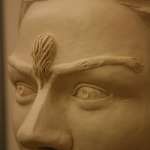
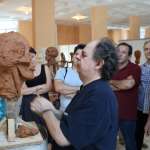
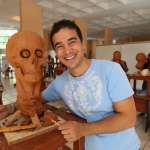
Michael Esson is an Australian artist and educator known for his expressive paintings and his unique approach to teaching visual perception. Combining decades of artistic experience with a passion for anatomy, he helps surgeons develop sharper observation and sculpting skills to enhance their aesthetic results.
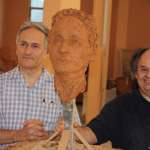
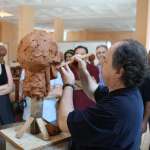
He has collaborated with Dr. Barış Çakır in several masterclasses, guiding participants through drawing and modeling exercises designed specifically for rhinoplasty training.
- Over 30 years of experience as a professional artist
- Specializes in abstract expressionist painting and collage
- Educated at the Kent Institute of Art and Design and Birmingham University
- Taught drawing and sculpting workshops internationally
- Developed training programs focused on artistic anatomy for surgeons
- Delivered courses in Turkey in collaboration with Dr. Barış Çakır
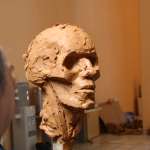
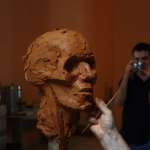
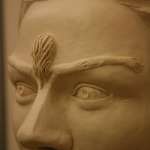
- Advocates hands-on learning through clay modeling and sketching
- Exhibits work in solo and group shows across Europe and beyond
Active Participation Is an
Essential Part of the Program
Cameras On
Participants are expected to keep their cameras on and engage actively during live sessions.Coursework Required
Completing the assigned drawing, sculpting and analysis exercises—particularly during the art module—is essential.Bring Your Own Cases
Participants are encouraged to consult the faculty regarding technique selection and share preoperative planning and postoperative results from cases performed during the program.Faculty Guidance for Your Clinical Cases
Participants are strongly encouraged to consult the faculty when selecting techniques for their own clinical cases. By sharing preoperative analyses, surgical plans and postoperative results, you can receive guidance that connects the course curriculum directly to your daily surgical practice.
Case Selection
Select suitable clinical cases from your own practice.
Preoperative Analysis
Evaluate nasal morphology, proportions and structural requirements.
Technique Discussion
Discuss technique selection and surgical strategy with the faculty.
Surgery
Apply the selected techniques in your own surgical practice.
Postoperative Review
Share postoperative analyses and review the outcome with instructors.
Turn Every Case Into a Learning Opportunity
This continuous exchange will help you understand not only which surgical technique to use, but also when, why and to what extent it should be applied.
Is This Course for You?
This program is designed for dedicated surgeons who:
- Are Plastic Surgeons, ENT Specialists, or Maxillofacial Surgeons
- Plan to perform 4–5 rhinoplasties per week
- Want to integrate preservation techniques and artistic anatomy into daily practice
Program Structure
- Duration: 9 Months (September 2026 – May 2027)
- Sessions: Every Sunday, 2 hours
- Platform: Zoom (Recorded)
- Materials: Aesthetic Septorhinoplasty textbook
- Language: English
- Note: All sessions are recorded. You may teach what you learn but may not share videos publicly.
Enrollment & Fees
- Course Fee: $10,000 (Early Registration)
- Payment Methods: Bank transfer or credit card
💵 Course Fee and Important Dates
- The course fee is $10,000 for all registrations completed by August 15, 2026.
- After this date, the fee will increase to $12,000.
❗ Cancellation Policy
If you cancel your registration within the first month of the program start date, you will receive an 80% refund of your course fee.
After this period, no refunds will be issued.
If you cannot attend the live sessions, all recordings and materials will remain accessible to you.
What you need?
- Clay for sculpting exercises
- Pencils and drawing notebooks
- Reliable internet connection
What Our Participants Say
Hear from surgeons who experienced our interactive training and mentorship program.
I have always considered myself a structural rhinoplasty surgeon. When I first heard about preservation rhinoplasty, I was intrigued and wanted to learn more. Over the years, I watched recordings from the preservation course taught by Dr. Toriumi and Dr. Kosins in Florida, attended the first Preservation Rhinoplasty Course there in 2023, and later took the Nos & Face course in Portugal last July.
Despite all of that, I still felt that the safest way to begin was with a high strip. I honestly believed there was no way I would ever become comfortable performing a low strip.
Everything changed after taking your course with Erhan.
For the first time, I truly understood the concepts, the philosophy, and even the terminology of preservation rhinoplasty. I completely agree with your statement that a typical two- or three-day course can only provide a brief introduction. It simply isn’t enough time to absorb and understand such a complex subject.
The weekly Sunday sessions, with their detailed lectures and opportunity to revisit the material, made all the difference. Yes, I watched the recordings multiple times, but each viewing deepened my understanding. Eventually, everything clicked.
Your extraordinary attention to every detail of the nose gave me a much deeper appreciation of nasal anatomy and of the elegance and power of preservation rhinoplasty. Michael Esson’s anatomy sessions were equally invaluable. Even though I thought I already knew the anatomy well, he helped me see it from an entirely different perspective.
Before this course, I performed almost all of my rhinoplasties using an open approach unless the patient had only a very small dorsal hump. Since learning from you, I have converted the majority of my cases to closed preservation techniques. I am still refining my process, but I can already see my outcomes continuing to improve. More importantly, I now have a much broader surgical armamentarium, allowing me to tailor the operation to each individual patient rather than relying on a single approach.
In my opinion, whether someone is just beginning their rhinoplasty journey or has been performing rhinoplasty for decades, this is the most comprehensive and educational preservation rhinoplasty course available. It doesn’t simply teach techniques—it changes the way you think about the nose.
Thank you again to you, Erhan, and Michael for your incredible dedication to teaching. I am sincerely grateful for everything I have learned, and I am excited to take the course again. I know there is still much more to learn, and I look forward to continuing that journey with all of you.
Carlo Honrado
Baris , Erhan , structural approach to preservation and cartilage management completely changes how one looks at Rhinoplasty . Truly masterclass .
I also want to say how incredible it is to be learning alongside such a dedicated group of professionals here. The insights and discussions from everyone have always been truly inspiring.
For the upcoming course , I recommend that you consider organizing a graduation meeting at the end to get-together, connect & celebrate
Thank you all 🙏
Niddal Assadi
Thank you dr Baris for the short meeting today. I completely agree with the previous our fellow surgeons. As a surgeon performing rhinoplasty as well as procedures on other areas of the body, I know how much our techniques evolve throughout our professional lives. We know the anatomy, we understand the function — but beauty is about proportions, harmony, and balance.
And we never stop learning.
The opportunity to learn from surgeons who have spent years developing their techniques and who are willing to openly share their knowledge and experience is truly invaluable.
What makes this course so unique is its interactive format and the time it gives us. There is time to understand the details, go back to the material, rethink it, ask questions, and then return to our own practice with a deeper understanding.
This is truly world-class education, and I feel privileged to continue learning from some of the best surgeons in the world🙏
Thank you for teaching us not only how to make a nose better, but how to make it beautiful, harmonious, functional — and stable over time.
Małgorzata Kuźlan
Ready to Transform Your Rhinoplasty Practice?
This is a rare opportunity to elevate your preservation rhinoplasty skills through a rigorous, artistic, and interactive learning journey with Dr. Barış Çakır.
